Published 11/06/2026 – est. 4 minutes to read.
Vulnerability scanning is a crucial step in protecting your digital assets from cyber threats.
It involves automatically identifying security weaknesses, such as outdated software, misconfigurations, and common exploits, before attackers can exploit them.
Websites and APIs are frequent targets because they’re publicly accessible. Without regular scanning, issues like broken authentication, data exposure, or unpatched components can go unnoticed and lead to serious breaches.
What Is Website Vulnerability Scanning?
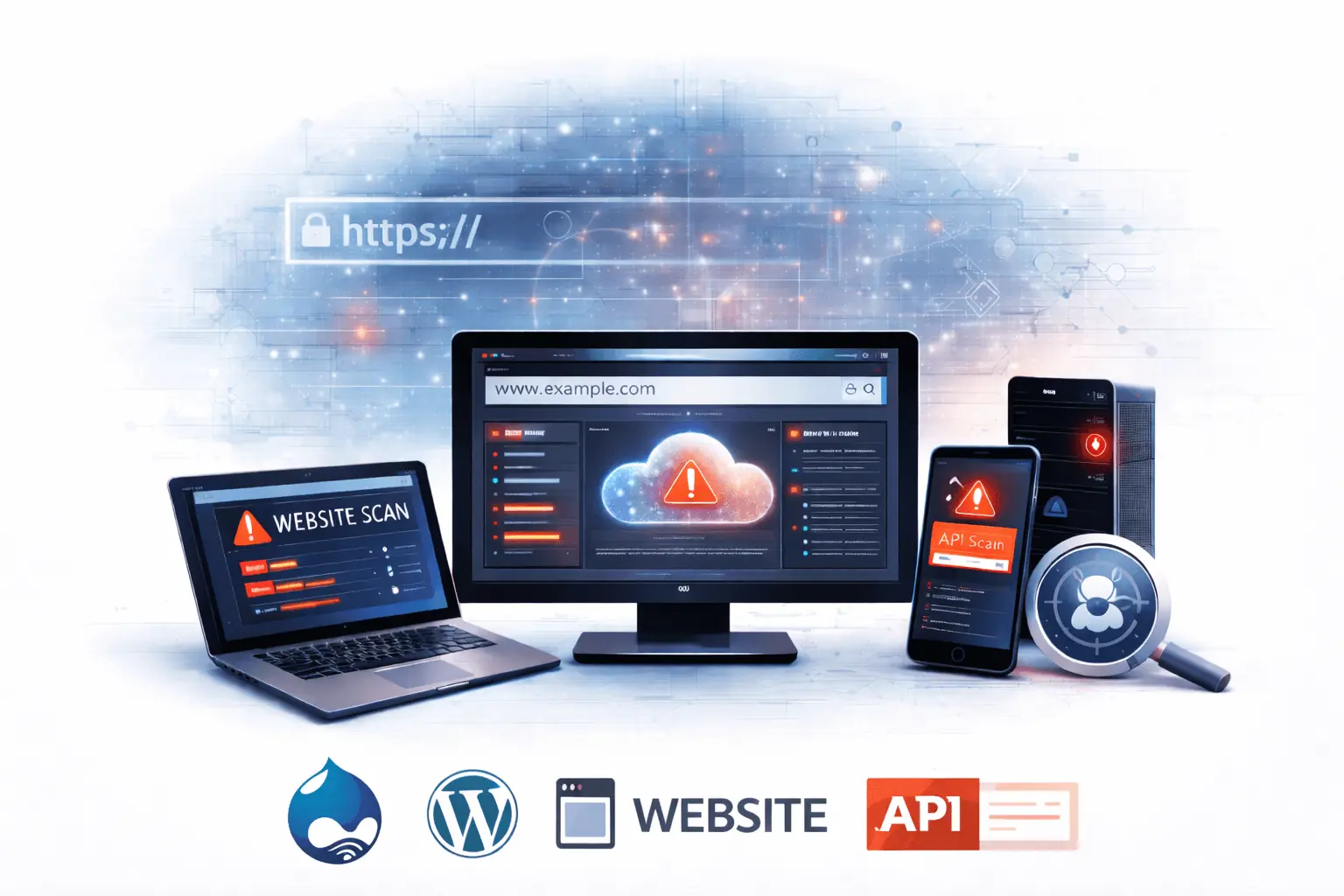
Website vulnerability scanning is the process of automatically identifying security weaknesses, misconfigurations, and known vulnerabilities within a website or web application. These scans analyse the website’s infrastructure, code, plugins, databases, APIs, and server configurations to uncover potential entry points for attackers.
Vulnerability scanners help detect issues such as:
- SQL Injection (SQLi)
- Cross-Site Scripting (XSS)
- Outdated software and plugins
- Weak authentication mechanisms
- Misconfigured servers
- Exposed sensitive information
- Insecure APIs
- SSL/TLS vulnerabilities
By identifying these risks early, organisations can take corrective action before cybercriminals exploit them.
Platforms like WordPress and Drupal are especially important to monitor. Their widespread use and reliance on plugins or modules make them attractive targets. A single vulnerable extension or missed update can compromise an entire site.
Why Regular Scanning is Necessary
Regular vulnerability scanning helps you:
- Detect and fix security issues early
- Protect sensitive data
- Maintain User trust
- Stay compliant with security standards
- Reduce the risk of downtime or cyber attacks
Conclusion
Website vulnerability scanning is no longer optional; it is a critical cybersecurity practice for organisations of all sizes. By proactively identifying and addressing security weaknesses, businesses can protect sensitive data, prevent costly breaches, maintain customer trust, and meet regulatory requirements.
Investing in website security today can prevent devastating consequences tomorrow.
To evaluate your website vulnerability scanning, conduct a Cloud Security audit, or discuss our services, connect directly with our technical team:
Telephone: 0161 706 0244
Email: info@cybersecurityspecialists.co.uk
Related Pages