Published 22/06/2026 – est. 4 minutes to read.
Understanding the Differences
Cyber threats today are more sophisticated, targeted, and persistent than ever. As a result, organisations are evolving their security testing approaches beyond traditional methods.
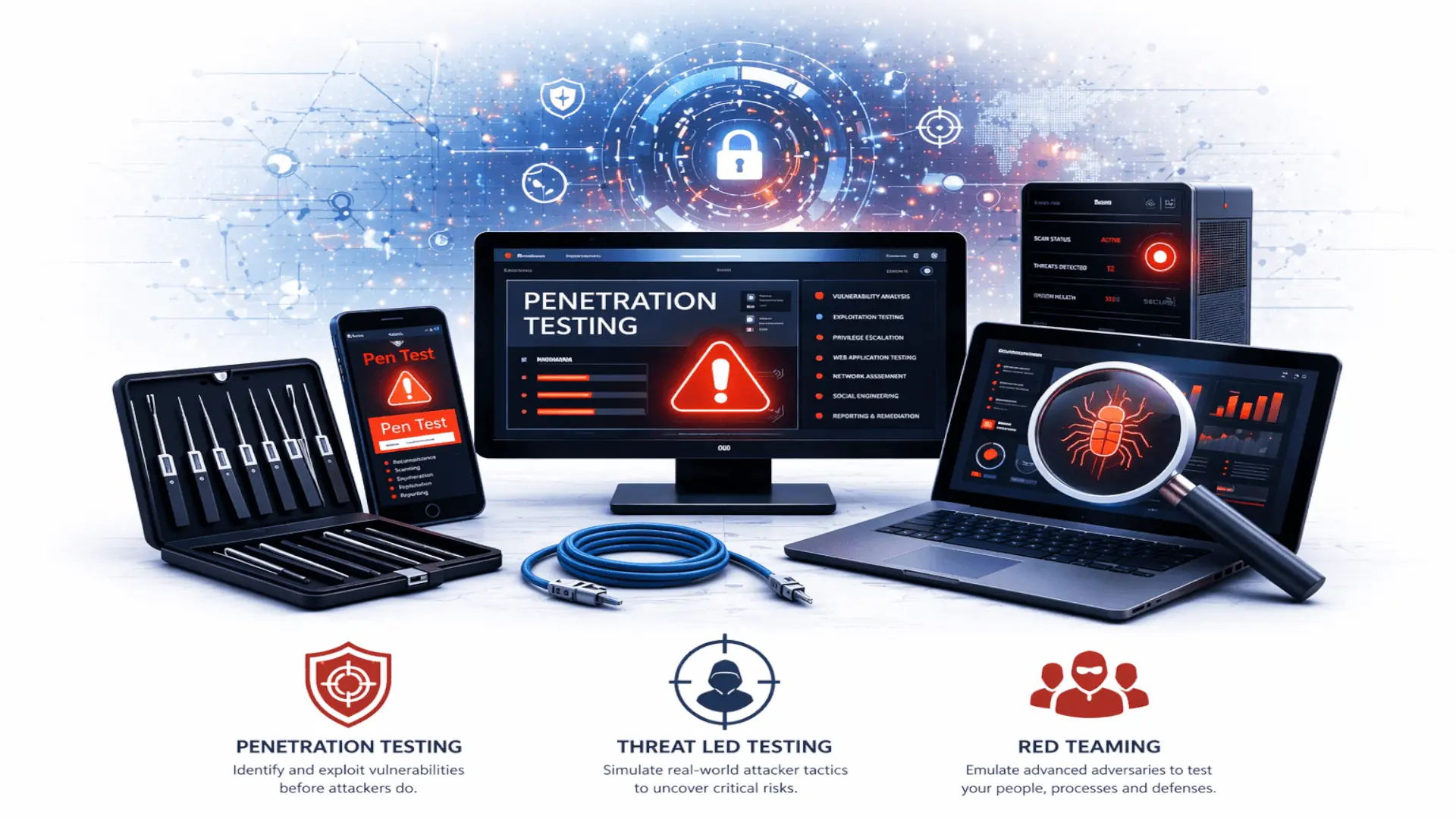
Penetration testing, threat-led testing, and red teaming each play a distinct role in helping organisations better understand and manage risk. Knowing how they differ and how they complement each other can help you take a more informed approach to security.
Vulnerability Scanning: Identifying the ‘Low-Hanging Fruit’
Vulnerability scanning is often the first step in any security programme. It provides automated, continuous visibility of known vulnerabilities across systems, applications, and infrastructure.
It helps organisations:
- Identify missing patches and outdated software
- Detect known vulnerabilities quickly
- Maintain a baseline level of security hygiene
However, vulnerability scanning is primarily focused on known issues. It’s highly effective at identifying the ‘low-hanging fruit ‘, but it doesn’t demonstrate how vulnerabilities could actually be exploited or combined in a real attack.
Penetration Testing: Going Beyond the Basics
Penetration testing builds on vulnerability scanning by taking a more advanced, hands-on approach.
Instead of just identifying vulnerabilities, it:
- Actively attempts to exploit weaknesses
- Chains vulnerabilities together to simulate real attack paths
- Validates the true impact of security gaps
This provides a much deeper understanding of risk and answers a critical question:
‘What could an attacker actually achieve?’
Threat-Led Testing: Prioritising Real-World Risk
Threat-led testing aligns security assessments with real-world threat intelligence.
Rather than treating all vulnerabilities equally, it focuses on:
- The most relevant threats to your organisation
- Common attacker techniques
- High-value systems and data
This approach adds context, helping organisations understand which risks are most likely to be targeted.
Red Teaming: Simulating Real Attacks
Red teaming takes a holistic approach by simulating real-world attack scenarios.
It goes beyond technology to test:
- People (e.g. phishing and social engineering)
- Processes (incident response and escalation)
- Detection and monitoring capabilities
Red teaming helps organisations evaluate how effectively they can detect and respond to an active threat.
A More Informed Approach to Security Testing
Each of these approaches offers a different perspective:
- Vulnerability scanning identifies the low-hanging fruit
- Penetration testing validates and exploits real weaknesses
- Threat-led testing adds context and prioritisation
- Red teaming tests real-world resilience
Understanding these differences allows organisations to make better decisions about how to structure their security testing strategy based on their maturity, risk profile, and objectives.
Conclusion
There’s no one-size-fits-all approach to security testing. What matters is having the right level of visibility into your risks and the ability to act on them effectively.
From identifying basic vulnerabilities to simulating real-world attacks, each approach plays a role in strengthening your overall security posture.
To discuss your risks and ability to act on them, or to discuss all our services, connect directly with our technical team:
Telephone: 0161 706 0244
Email: info@cybersecurityspecialists.co.uk
Related Pages