Published 01/06/2026 – est. 4 minutes to read.
In today’s threat landscape
Attackers don’t start from the inside; they start from the outside. Your external network footprint is the first thing they see, probe, and attempt to exploit.
From exposed services to misconfigured mail servers, even small oversights can create entry points into your environment. That’s why continuous external vulnerability scanning is essential.
Your External Attack Surface is Always Changing
Organisations often underestimate how dynamic their external environment is. New systems are deployed, firewall rules are updated, and services are exposed, sometimes without full visibility.
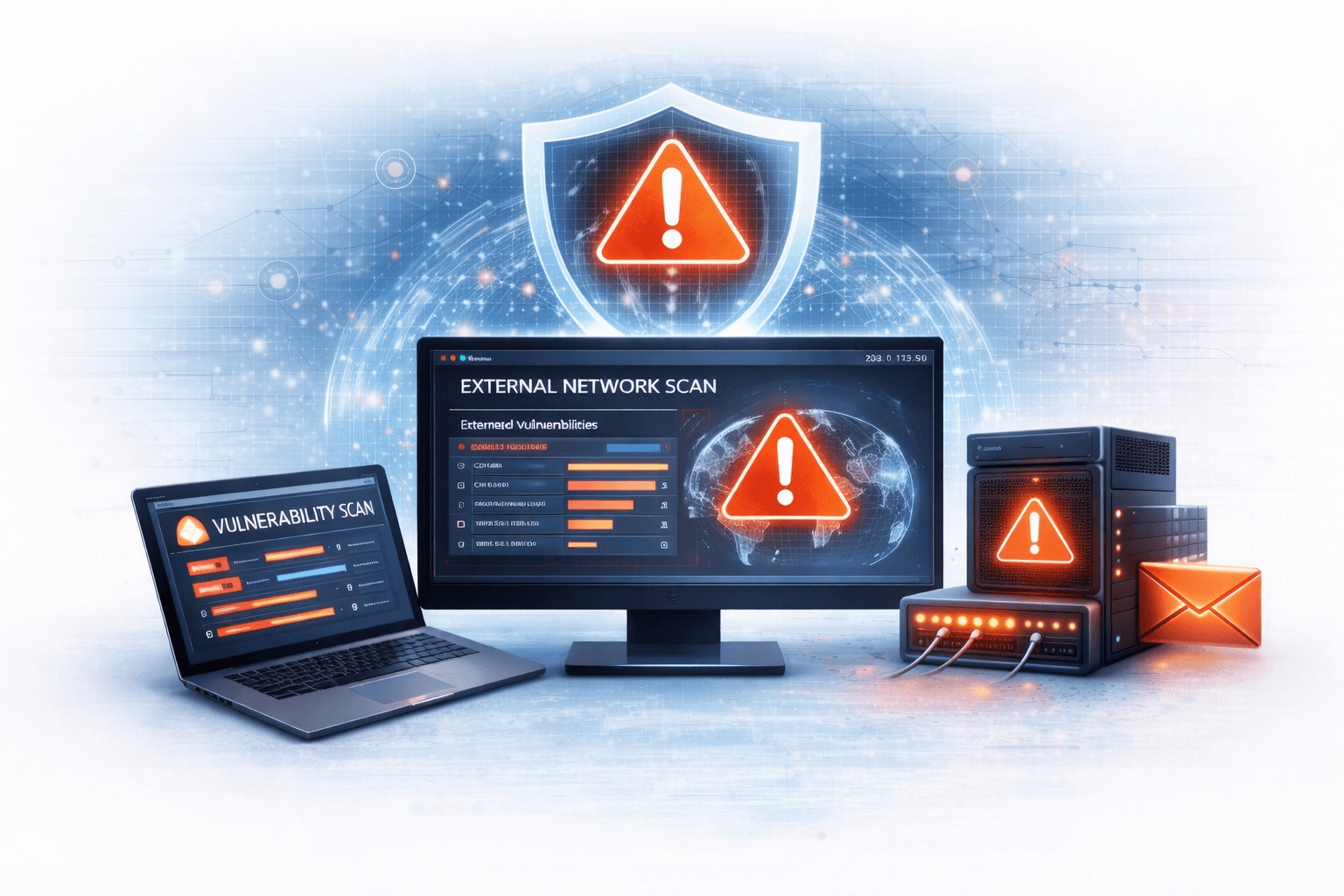
External scanning helps you continuously monitor:
-
Public-facing IP addresses
-
Open ports and exposed services
-
Firewall configurations
-
Mail server security posture
Without this visibility, you’re relying on assumptions rather than facts.
External Firewalls: The Risk of Open Ports and Misconfigured Services
Open ports are not inherently bad, but unnecessary or insecure services exposed to the internet are a major risk.
A classic example is FTP on port 21:
-
Often configured without encryption
-
Credentials can be transmitted in plain text
-
Frequently targeted by attackers for brute-force attacks
Other commonly exploited services include:
-
RDP (3389) exposed to the internet
-
SMB (445) vulnerabilities
-
Outdated web services on ports 80/443
External scanning identifies these risks early, allowing you to close, restrict, or secure them before they are exploited.
Mail Servers: A High-Value Target
Mail servers are among the most attractive targets for attackers because they sit at the intersection of communication, identity, and access.
Misconfigured mail servers can lead to:
-
Open relay vulnerabilities (used for spam and phishing)
-
Weak TLS configurations
-
Exposure to spoofing attacks (lack of SPF, DKIM, DMARC)
-
Credential harvesting and brute-force attacks
Regular scanning ensures your mail infrastructure is not only functional but secure and resilient.
Proactive Defence, Not Reactive Response
The key benefit of external scanning is simple – you find the weaknesses before attackers do. With regular scanning, organisations can:
-
Identify and remediate risks early
-
Reduce their external attack surface
-
Prioritise critical exposures
-
Strengthen perimeter security
This shifts your security posture from reactive firefighting to proactive risk management.
Conclusion
Your external network is your front door, and attackers are constantly testing the handle.
Open ports, misconfigured firewalls, and insecure mail servers provide easy entry points if left unchecked. Regular external vulnerability scanning ensures you maintain control, reduce risk, and stay one step ahead.
In cybersecurity, what you can’t see can hurt you. External scanning ensures nothing is left exposed.
To evaluate your External Vulnerability Scanning, conduct a Cloud Security audit, or discuss our services, connect directly with our technical team:
Telephone: 0161 706 0244
Email: info@cybersecurityspecialists.co.uk
Related Pages