Published 16/05/2026 – est. 2 minutes to read.
Closing the Gaps: Attackers Exploit
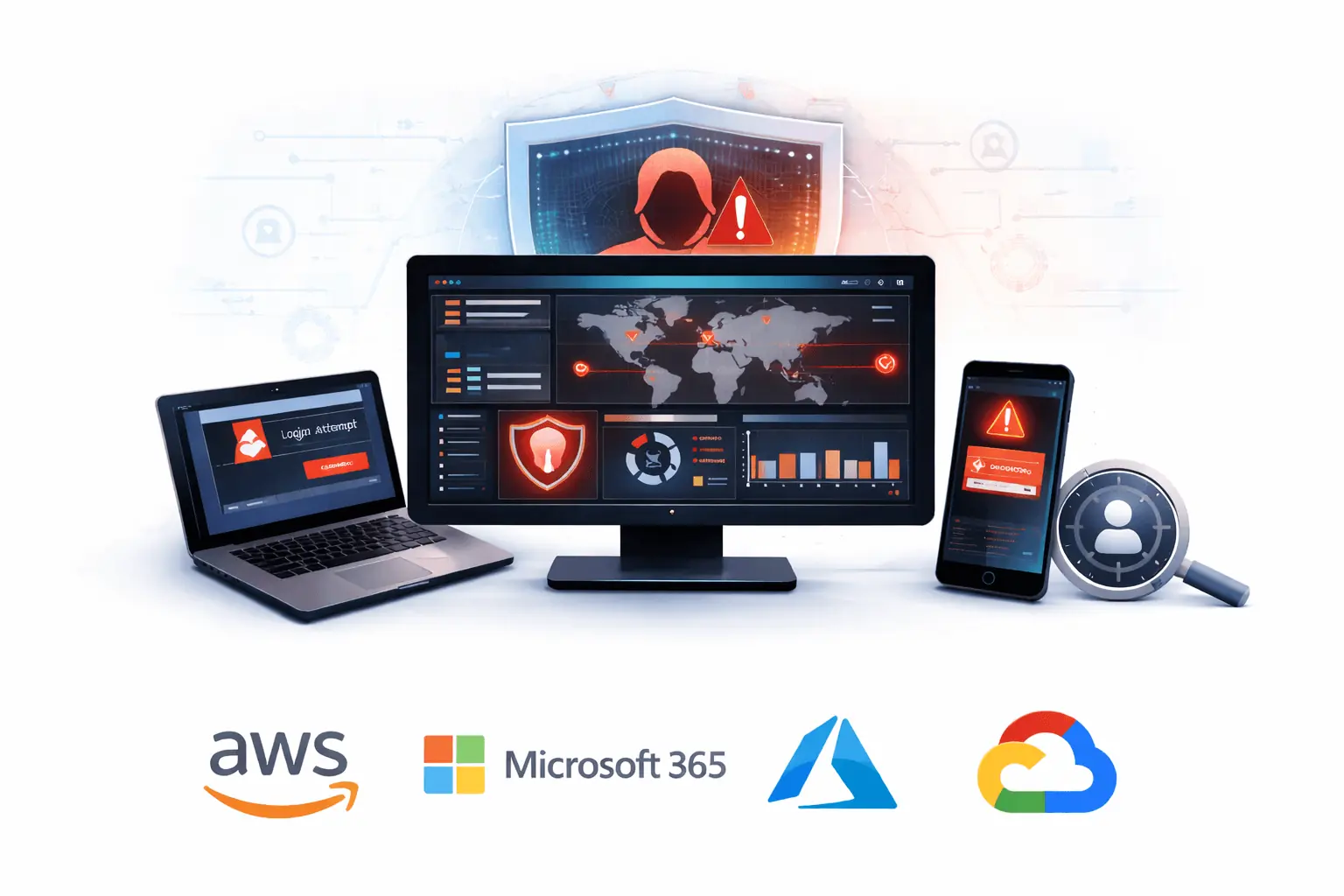
As organisations continue to adopt cloud platforms like AWS, Microsoft 365, Azure, and Google Cloud, identity has become the new security perimeter. Firewalls and endpoint protection are no longer enough; attackers are increasingly targeting user accounts to gain access, move laterally, and exfiltrate data.
User Threat Monitoring (UTM) is critical in detecting and responding to these risks early. Without it, organisations often remain blind to subtle yet dangerous signals, especially regarding weak authentication practices, dormant accounts, and compromised credentials.
Key Risk Areas
Lack of Multi-Factor Authentication (MFA)
Passwords alone are no longer sufficient to protect user accounts. Even strong passwords can be phished, reused, or stolen through malware and data breaches.
Dormant User Accounts
Dormant (inactive) accounts are one of the most dangerous blind spots in any environment. These accounts often belong to former employees, contractors, or unused service identities—and they’re rarely monitored.
Breached Passwords on the Dark Web
Credential leaks happen constantly. Billions of usernames and passwords from past breaches are circulating on the dark web, and many users reuse passwords across services.
How User Threat Monitoring helps
User Threat Monitoring isn’t just about detection; it’s about visibility and prevention. By continuously analysing user behaviour and account posture.
Organisations can:
-
Identify accounts without MFA enabled
-
Detect accounts with long periods of inactivity
-
Continuously check for exposed credentials tied to your users
-
Correlate login activity with known breach data
-
Enable proactive password resets before exploitation occurs
Conclusion
In today’s threat landscape, identity is everything. Organisations that invest in User Threat Monitoring gain a critical advantage by seeing what attackers see and stopping them before they succeed.
If you’re not actively monitoring your users, you’re trusting that nothing will go wrong. That’s not a strategy; it’s a gamble.
To evaluate your User Threat Monitoring, conduct a Cloud Security audit, or discuss our services, connect directly with our technical team:
Telephone: 0161 706 0244
Email: info@cybersecurityspecialists.co.uk
Related Pages