Published 14/02/2022 – est. 5 minutes to read.
Ever feel like you end up working from the minute you get up till early evening? Feel like you don’t switch off from work? Constantly checking Teams, Slack or emails because it’s on your phone? Then you need to read this Blog!
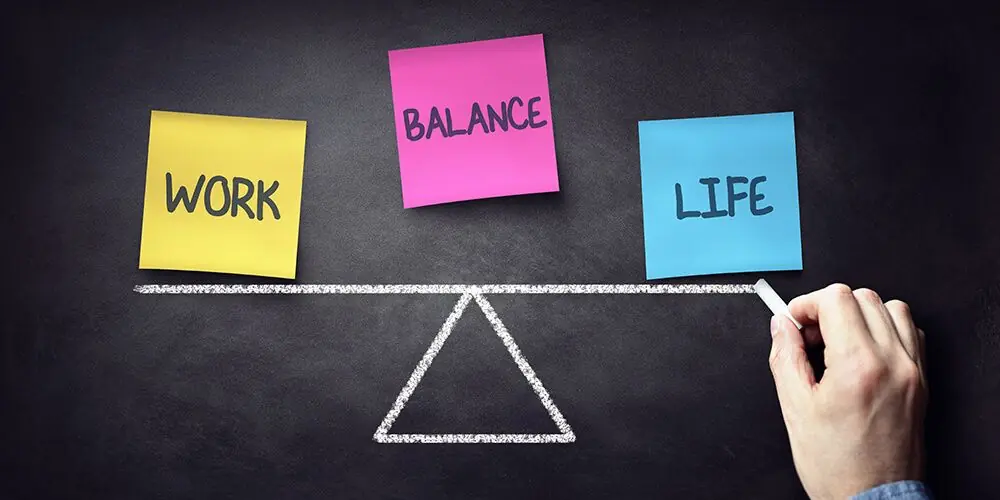
Work-life balance is different for everyone; priorities and responsibilities vary, and people cope in different ways. Some people see work-life balance as splitting time 50/50 between work and leisure or personal life, but it doesn’t seem that easy to separate the two.
Prior to the big shift in the ways of working, when most people worked in an office, there was a clear line between work and personal life. However, with the shift to remote work, things have changed, and it is much harder to maintain a clear divide between work and personal life.
Do people ever say to you, ‘You are married to your job?’ ‘You work too many hours’ or ‘Work seems to always come before the family’? Well, let’s think about how this is impacting your personal well-being.
- Exhaustion: You become so tired that it impacts your productivity and ability to work.
- Health deterioration: You become more stressed, and symptoms of ongoing medical conditions may worsen.
- Lost time with family and friends: feeling left out of events can result from working too much.
Understanding whether your work-life balance is unhealthy is important, and there are changes you can make. It may feel normal to work long hours or be under extreme stress, especially since we have most likely been in that routine for some time and it has become a habit.
Take a Step Back!
So, let’s take a step back and take the following steps to understand if you have a positive work-life balance:
- Reflect: Ask yourself what is causing you to be unhappy, feel stressed, or feel anxious. What am I losing out on? What is affecting my work and personal life? Taking time to reflect will help you understand your priorities and whether the way you are currently working and living is right for you.
- Feelings: Now that you have reflected on your current routine, how does this make you feel? Understanding your feelings will help you to understand what changes you need to make. If you have realised that you are unhappy because you don’t get to spend time with family or are missing out on events, you may feel frustrated and angry.
- Restructure: Making small changes can have a big impact on how you feel. Ask yourself whether working long hours is worth losing family time, or whether working on weekends is worth missing football with friends.
- Make the changes: What can you do at work to help you achieve balance? It could be asking for flexible hours, using up annual leave and not checking emails or messaging systems outside your working day.
Throughout your working life, juggling your career and personal life will always present challenges. But setting limits can help to manage these challenges and allow you to look after yourself first. Three ways to help set basic limits are
- Manage your time: Do not overcommit yourself to tasks; ensure you allow enough time to complete them. Understand to ‘Work Smart, not long’
- Learn to say ‘no’: Understand the priorities of work and home and have a to-do list.
- Disconnect from work: Turn off the laptop at the end of the day and mute the messaging apps on your phone. When working from home, you may feel like you are always meant to be working, which can cause significant stress. Have an area at home where you work from and learn to disconnect at the end of the day. Making sure that at the end of the day, you transition from work mode to family mode.
- Take proper breaks: Go for a walk at lunch, put the washing on or throw the hoover round, but step away from the computer screen.
Care For Yourself
Allowing yourself to have a work-life balance will give you time to care for yourself. If you have a healthy lifestyle, you are essentially coping with stress and achieving work-life balance. To have a healthy lifestyle, you need to try
- Eat well – have regular meals when working, drink plenty of fluids, and maintain energy levels. If your energy levels are low, you will be less productive and end up working longer because you are unable to concentrate.
- Physical Activity – The NHS recommends 150 minutes of exercise a week. That could be going to the gym, walking to the shops, or playing on a sports team. Even mowing the lawn is physical exercise!
- Sleep – 6-9 hours a night will keep you feeling refreshed and help you focus during the workday. However, do you find that you wake up thinking ‘I have not done this’ OR worrying about a deadline, and then you are unable to go back to sleep because it’s on your mind? Well, take a notepad to bed; if you wake up, write down the thought and go back to sleep, so you will not forget.
- Relax – Time to relax is crucial; it is the time when you can do activities that take your mind off work, allowing you to recharge. Find ways to relax with family and friends – yoga, hiking, or even dancing.
- Support colleagues – We have all been in a situation where the kids are off sick, you have a medical appointment, or perhaps the electricity has gone out and you are waiting for the electrician. So, support your colleagues when they have an issue like this, because no doubt you will have a time when you may not be online.
Reflect
Take a step back to reflect on what makes you happy and incorporate that back into your life. Spending that time with family and friends is precious and valuable, as well as maintaining a healthy lifestyle for yourself.
Find out more about our social values:
Telephone: 0161 706 0244
Email: info@cybersecurityspecialists.co.uk
Related Pages