
Quantum computing is an emerging technology that uses the principles of quantum mechanics to process information in fundamentally different ways from traditional computers.
While classical computers use bits (0s and 1s), quantum computers use qubits, which can exist in multiple states at once (a concept known as superposition) and can be linked together through entanglement. This enables quantum systems to evaluate many possibilities simultaneously, offering enormous computational power for specific types of problems.
Quantum computing isn’t just about faster processing—it represents a step change in capability. Global technology leaders such as IBM, Google, and UK-based initiatives supported by organisations like UK Research and Innovation are driving rapid progress in this space.
However, alongside these benefits comes a significant challenge—particularly for cybersecurity.
The Cybersecurity Risk
Threat to Current Encryption Standards
Much of today’s digital security relies on encryption methods such as RSA and elliptic curve cryptography (ECC). These are widely used across:
- Online banking and payment systems
- Secure communications (HTTPS, VPNs)
- Government and defence systems
Quantum computers could break these encryption methods using algorithms like Shor’s Algorithm, potentially exposing sensitive data.
For UK organisations operating under frameworks like GDPR and guidance from the National Cyber Security Centre, this presents a future compliance and risk challenge.
Harvest Now, Decrypt Later
A growing concern for UK businesses and public sector organisations is the idea that cybercriminals or even nation states may already be collecting encrypted data with the intention of decrypting it once Quantum capabilities mature.
This is particularly relevant for sectors dealing with long-term sensitive data, including:
- NHS and healthcare records
- Financial services and pensions
- Government and defence information
Risks to Digital Trust and Infrastructure
If current encryption methods become vulnerable, the consequences could include:
- Compromised digital identities
- Invalidated digital signatures
- Reduced trust in online services
Given the UK’s push towards digital transformation and services, this could have wide-reaching implications.
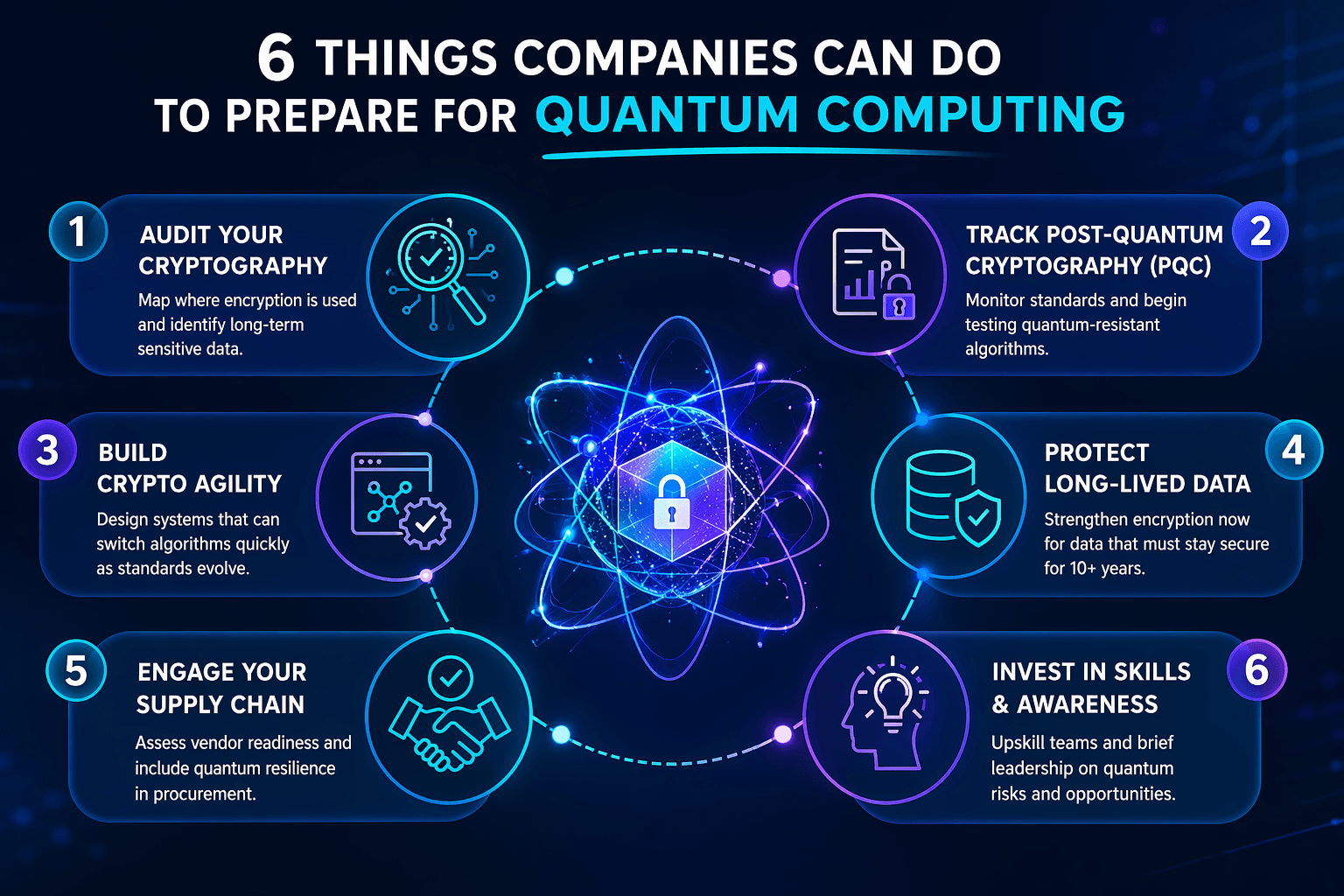
How UK Companies Can Prepare
Conclusion
Quantum computing is often talked about as a future technology but its impact on cybersecurity is something organisations need to consider now.
For UK businesses, the challenge is not just technical but regulatory, operational, and strategic. Those who begin preparing early—by understanding their risks, adopting flexible systems, and monitoring emerging standards will be far better placed to adapt.
The quantum era may still be developing, but the window to prepare is already open.